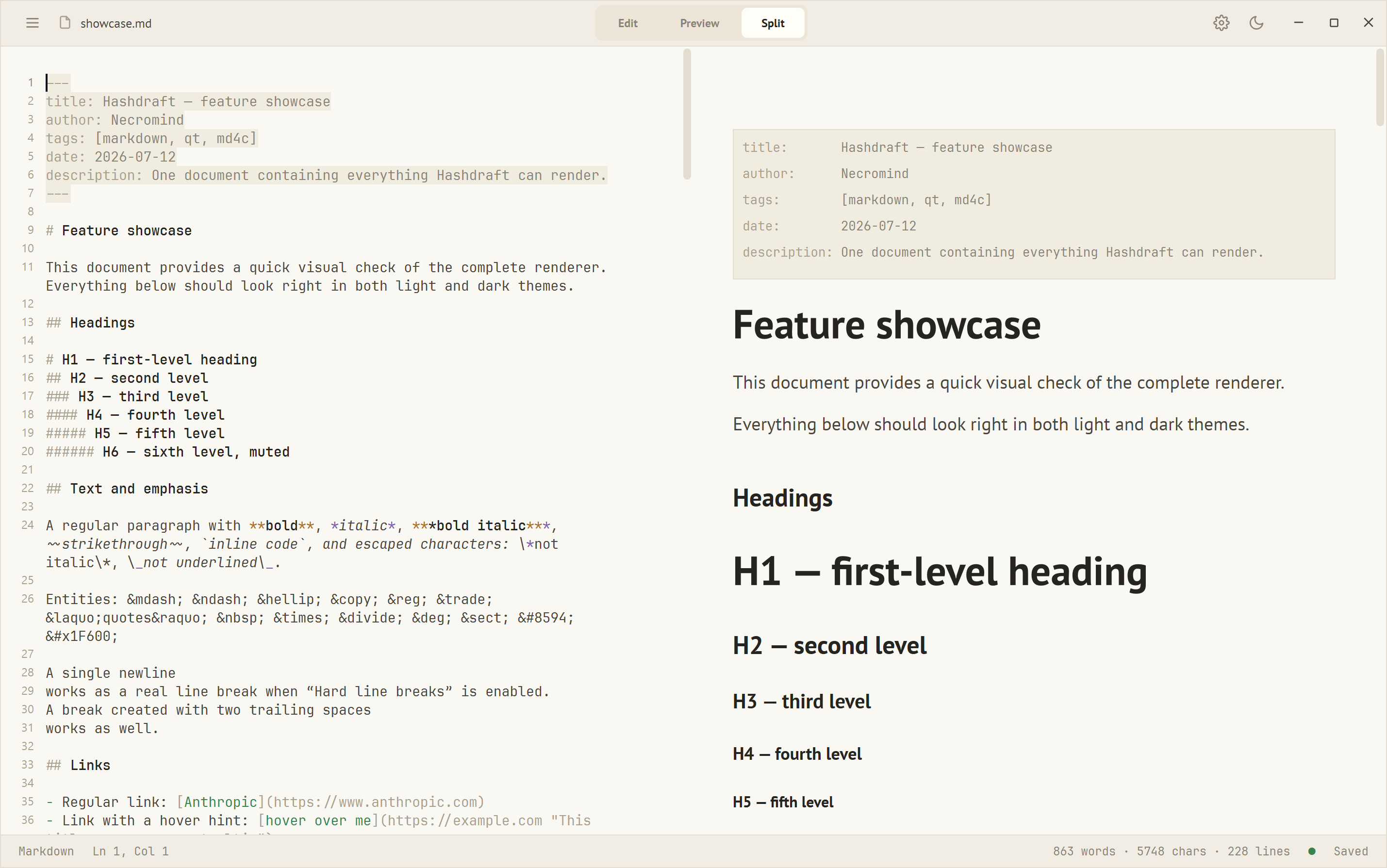
 Hashdraft
README documentation
Generate a useful README structure for your project
A README should tell a new visitor what the project does, why it matters, how to install it, and what to do next. This generator turns project details into organized Markdown with optional badges, features, usage, contributing, license, and table-of-contents sections.
Lead with the purpose
Use a clear project name and one-sentence description. Readers should understand the category and main benefit before they reach installation instructions.
Include runnable instructions
Add installation and usage commands a new user can copy. State prerequisites, expected files, and important configuration instead of assuming repository knowledge.
Set contributor expectations
Explain how to report problems or propose changes and identify the license. These sections remove uncertainty for both users and potential contributors.
How to make a README
- Enter the project name, repository address, description, installation, and first-use instructions.
- Select only the optional sections and badges that provide real information for this project.
- Review the rendered README, copy or download
README.md, then add screenshots and project-specific details in your editor.
README generator questions
Which README sections are essential?
Most projects need a name, purpose, installation, basic usage, and license. Add configuration, contributing, support, or architecture only when readers need them.
Should every project use badges?
No. Add badges that answer useful questions such as build status, current version, or license. Decorative badge rows can distract from the introduction.